Friday, December 19, 2008

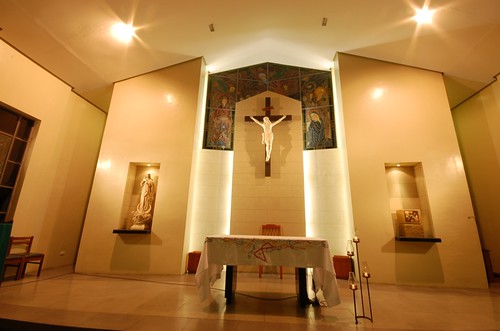
Christmas - and Standing on One's Head


Christmas - and standing on one's head
By Horacio de la Costa, S.J.

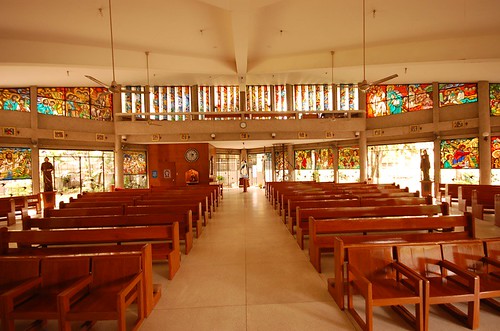
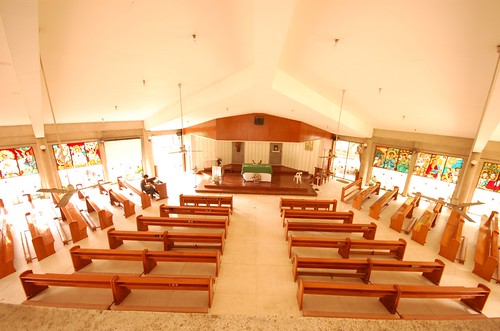
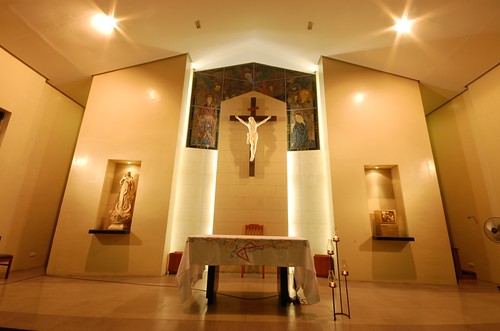
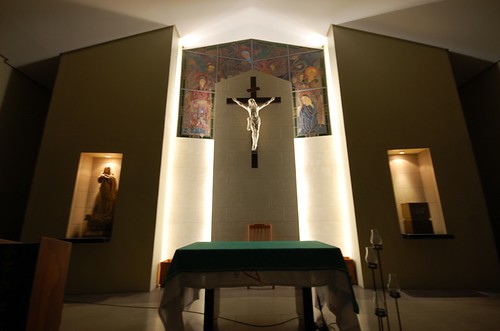
(These are excerpts from a homily delivered by the late Fr. Horacio de la Costa, SJ, at the old Ateneo de Manila College of Law chapel in the mid-1950s)

Christmas is when we celebrate the unexpected; it is the festival of surprise.

This is the night when shepherds wake to the songs of angels; when the earth has a star for a satellite; when wise men go on a fool's errand, bringing gifts to a Prince they have not seen, in a country they did not know.

This is the night when one small donkey bears on its back the weight of the world's desire, and an ox plays host to the Lord of heaven.


This is the night when we are told to seek our King, not in a palace, but in a stable.

Although we have stood here, year after year, as our fathers before us, the wonder has not faded, nor will it ever fade; the wonder of that moment, when we push open the little door, and enter, and entering find in the arms of a Mother, who is a Virgin, a baby who is God.

Chesterton said it for all of us: "The way to view Christmas properly is to stand on one's head."

Was there ever a house more topsy-turvy than the House of Christmas, the cave where Christ was born?

For here, suddenly, in the very heart of earth, is heaven; down is up and up is down; the angels and the stars look down on God who made them and God looks up at the things He made.

There is no room in an inn for Him who made room and to spare, for the Milky Way. And where God is homeless, all men are at home.

We were promised a Savior. But we never dreamed that God, Himself would come to save us.

We knew that He loved us. But we never dared to think that He loved us so much. As to become like us.

But that is the way God gives. His gifts are never quite what we expect, but always something better than we hoped for.

We can only dream of things too good to be true; God has a habit of giving things too good to be false.

That is why our faith is a faith in the unexpected, a religion of surprise.

Now more than ever, living in times so troubled, facing a future so uncertain, we need such faith We need it for ourselves and we need it to give to others.

We must remind the world that if Christmas comes in the depth of winter, it is that there may be an Easter in the spring.

Lecture-Visit of H.E. Prof Jose Ramos-Horta


Is Lasting Peace an Attainable Dream?
H.E. Prof. Jose Ramos-Horta
President of Timor-Leste
1996 Nobel Laureate for Peace

14 January 2009; 2:00 PM
Auditorium, Finster Hall
Ateneo de Davao University
Jacinto St., Davao City

Open to General Public
RSVP: (82) 221.2411 local 8201
e-Mail: pres@addu.edu.ph

This Lecture-Visit is part of a program to bring Nobel Laureates to the Philippines, coordinated by Bridges: Dialogues Towards a Culture of Peace and International Peace Foundation based in Bangkok, Thailand.

H.E. Prof. Jose Ramos-Horta is a 1996 Nobel Laureate for Peace, the President of Timor-Leste and a Patron of the International Peace Foundation.

Jose Ramos-Horta was born in Dili, the capital of East Timor, to a Timorese mother and a Portuguese father who had been exiled to what was then Portuguese Timor by the Salazar dictatorship. He was educated in a Catholic mission in the small village of Soibada. Of his eleven brothers and sisters, four were allegedly killed during the struggle between Fretilin and Indonesian military.

A moderate in the emerging Timorese nationalist leadership, Jose Ramos-Horta was appointed Foreign Minister in the "Democratic Republic of East Timor" government proclaimed by the pro-independence parties in November 1975. When appointed minister, Jose Ramos Horta was only 25 years old. He left East Timor three days before the Indonesian troops invaded to plead the Timorese case before the United Nations.

Jose Ramos Horta arrived in New York to address the UN Security Council and urge them to take action in the face of the Indonesian military onslaught which would result in over 200,000 East Timorese deaths between 1976 and 1981. During the 24 years of the occupation of East Timor José Ramos-Horta was the international voice of the Timorese people. In exile from his country from 1975 to 1999, he was the Permanent Representative to the United Nations for the Timorese independence movement. The youngest UN diplomat in history and an international human rights figure, he is one of the three central figures in the country's struggle for independence.

In 1996 he was awarded the Nobel Peace Prize with Bishop Carlos Belo, the religious leader of East Timor, "to honour their sustained and self-sacrificing contributions for a small but oppressed people". A portion of the funds received from the Nobel Prize were used to establish the José Ramos-Horta Microcredit Fund for the Poor, which is in full operation today, with a payback rate of 97%.

In 1999, under the umbrella of the United Nations, East Timor held a referendum allowing the Timorese to vote on independence. When the referendum results showed more than 85% favoring independence, Indonesia-backed militia were unleashed across the country. They killed thousands in the streets, displaced hundreds of thousands and burned 85% of the buildings in the country. After the entry of a UN peacekeeping force, Jose Ramos-Horta returned to his homeland to help rebuild the country from the devastation. Working closely with the UN and Sergio Vierra de Mello, the head of the UN Adminstration in East Timor until 2002, he helped to bring about peaceful elections of the country's President and Parliament, who in turn drafted the country's constitution.

After serving for seven years as the new country's Minister of Foreign Affairs, when turmoil and civil war threatened the new country, he stepped into the shoes of Prime Minister and immediately set about restoring calm to the country.

Before his appointment as Prime Minister, Jose Ramos-Horta was considered a possible candidate to succeed Kofi Annan as United Nations Secretary-General.[9] He dropped out of the race in order to serve as East Timor's Prime Minister, but he has indicated that he might run for the UN position at some time in the future. In May 2007 Jose Ramos-Horta was elected President of Timor-Leste.

José Ramos Horta studied Public International Law at the Hague Academy of International Law and at Antioch University where he completed a Master of Arts degree in Peace Studies. He was trained in Human Rights Law at the International Institute of Human Rights in Strasbourg and attended Post-Graduate courses in American Foreign Policy at Columbia University in New York. He is a Senior Associate Member of the University of Oxford's St Antony's College and until today continues in his role as the international voice of East Timor.

Partners


Yuchengco Group of Companies
Presidential Assistant for the Peace Process
City Mayor of Davao City
University of the Immaculate Conception, Davao City


Wednesday, December 17, 2008

Misa de Gallo in Ateneo


SCHEDULE OF UNIVERSITY MASSES FROM DECEMBER 16, 2008 TO JANUARY 5, 2009

MISAS DE GALLO (Dec. 16 to 24) WILL BE AT 4:30 A.M. IN THE JACINTO CAMPUS COVERED COURT
CHRISTMAS MASS ON DECEMBER 24TH AT 8 P.M. IN THE COVERED COURT
NO MASS ON CAMPUS ON DECEMBER 25

USUAL 5 P.M. ANTICIPATED SUNDAY MASS IN THE UNIVERSITY CHAPEL
DECEMBER 20 (4TH SUNDAY OF ADVENT)
DECEMBER 27 (FEAST OF HOLY FAMILY)
and
DECEMBER 31, WEDNESDAY, (ANTICIPATED MASS FOR THE SOLEMNITY OF MARY, MOTHER OF GOD)

7 A.M. SUNDAY MASS ONLY ON DECEMBER 28 (FEAST OF HOLY FAMILY)

NO MASS ON CAMPUS ON JANUARY 1.

JANUARY 3, SATURDAY, (ANTICIPATED SUNDAY MASS FOR SOLEMNITY OF THE EPIPHANY OF OUR LORD)
REGULAR SCHEDULE OF NOON AND 5 P.M. MASSES WILL TAKE EFFECT
WITH THE RESUMPTION OF CLASSES ON JANUARY 5TH.

THANK YOU.

Fr. Rene C. Ocampo S.J.
University Chaplain
(82) 221.2411 local 8227

Monday, December 15, 2008

Weeweechu


It's a romantic full moon, when Pedro said, "Hey, mamacita, let's do Weeweechu."

Oh no, not now, let's look at the moon!" said Rosita.

Oh, c'mon baby, let's you and I do Weeweechu. I love you and it's the perfect time," Pedro begged.

"But I wanna just hold your hand and watch the moon." replied Rosita.

Please, corazoncito, just once, do Weeweechu with me."

Rosita looked at Pedro and said, "OK, one time, we'll do Weeweechu."

Pedro grabbed his guitar and they both sang.....


"Weeweechu a Merry Christmas, Weeweechu a Merry Christmas, Weeweechu a Merry Christmas, and a Happy New Year."

Saturday, December 13, 2008

Stealing Beauty (1996)

Stealing Beauty
Directed by Bernardo Bertolucci

After her mother commits suicide, nineteen year old Lucy Harmon travels to Italy to have her picture painted. However, she has other reasons for wanting to go. She wants to renew her acquaintance with Nicolo Donati, a young boy with whom she fell in love on her last visit four years ago. She also is trying tosolve the riddle left in a diary written by her dead mother, Sara. Written by Kale Whorton

For 20 years many visitors have come to the villa on an Italian hilltop owned by an English artist. Lucy, a 19-year-old American, was last there four years ago and wants to meet up again with the young Italian who kissed her and corresponded for a while. And she has brought the diary of her late mother filled with enigmatic poems that suggest Lucy was conceived on that hilltop. Lucy wants to find out if Daddy is the Italian war correspondent who wrote to her mother for 20 years. Then again Daddy could be the dying English playwright in residence or the artist who uses a chainsaw on tree trunks for his sculptures. The three, of course, have no idea that Lucy is there to solve a mystery. They, the artist's wife, daughter of that wife and the daughter's American lover are most intrigued by Lucy's virginity. Written by Dale O'Connor

Lucy Harmon is a 19-year old American girl who is the daughter of poet Sara Harmon. After Sara commits suicide, Lucy travels to Italty and visits her mother's friends, Diana and her husband, Irish artist Ian, where Lucy wants a picture of her painted. Lucy decided to return to Italy to reunite with Nicolo Donati, a Italian boy she once fell in love with four years ago, when she last visited Italy. But reuniting with Nicolo isn't the only reason why Lucy decided to return to Italy, Lucy is on a personal journey, as she sets out to solve a mystery in her Mother's diary and discover who her father is who conceived her 20 years ago. Lucy's journey leads her to befriend Alex, a play-writer who is dying of cancer whom Lucy thinks may be her father or her father could be the artist who makes statutes from trees and sets out to loose her virginity as Diana and her daughter Miranda's boyfriend Richard become intrigued by her. Written by

Three Poems:

The three poems we see Lucy (Liv Tyler) compose while in Italy are: - 1. I have her secret deep within for years I've had to hide I've bought the clues And now I'm hope To bring the truth outside - 2. I wait I wait so patiently I'm as quiet as a cup I hope you'll come and rattle me Quick! Come wake me up. - 3. The dye is cast The dice are rolled I feel like shit you look like gold.


Director: Bernardo Bertolucci


Writer: Bernardo Bertolucci (story) Susan Minot (writer)


Release Date: 14 June 1996 (USA)


Genre: Drama; Romance


Tagline: The most beautiful place to be is in love.


Tuesday, November 25, 2008

Secrets of Swimming Pool : An Interview with François Ozon

Secrets of Swimming Pool : An Interview with François Ozon

Swimming Pool is world-premiering In Competition at the 2003 Cannes International Film Festival. With Swimming Pool, Europe's most daring and inventive writer/director, François Ozon, reunites with his two favorite leading ladies, Charlotte Rampling (of Under the Sand) and Ludivine Sagnier (of 8 Women). Deliciously sophisticated and sexy, Swimming Pool, the first of Mr. Ozon's movies to be made in the English language, revisits the sense of mystery that infused Under the Sand.

Q: How did Swimming Pool bring you back together with your two favorite leading ladies?

François Ozon: After 8 Women, I wanted to return to a film that would be more intimate - simpler, with fewer characters - and would star actresses I already knew and had an easy rapport with. I immediately thought of Charlotte Rampling, because Under the Sand had been a beautiful experience for both of us. I wrote the part for her, and we awaited her commitment before moving forward.

Ludivine Sagnier's role was originally written for a young man. But I felt that a relationship between two women would be more interesting, and I wanted to further explore the kind of relationship that bound Gaby [Catherine Deneuve] and Louise [Emmanuelle Béart] in 8 Women. With Charlotte playing opposite Ludivine, I could suggest a mother/daughter relationship - and also match an established actress opposite a younger one.

Ludivine had suffered a bit during 8 Women because I paid more attention to the other actresses; except for Ludivine, I hadn't worked with any of them before. Since she played a tomboy in that film, I wanted to spoil her with a sexy new role. Ludivine began to train physically to become a sort of Marilyn Monroe of the South of France.

Q: This is your first movie in English. What motivated you to take this step?

FO: Once I made the lead character an English author and cast Charlotte, I thought it only natural. Also, I thought it would be fun to try to direct actors in English. I do speak the language but have not completely mastered it. Since Charlotte speaks fluent French, I didn't think it would be too complicated. The language did become a game in that, first, I wrote the script in French. Then I had it translated. Going from French into English, the script evolved, because some of the nuances in French did not translate exactly into English. We had to find equivalents.

Q: That's another part of the creative process, which Swimming Pool addresses as a whole.

FO: Yes. People are constantly asking me, "How is it possible for you to make one film after the other? Where does your inspiration come from?" To answer that question, I had the idea of projecting myself onto the character of an English writer instead of talking about myself as a director. So then the exploration became, how does a writer find inspiration and create a story, and what links that story to reality?

For her work, Sarah Morton needs to be alone, to lock herself away in a comfortable house and follow a strict regimen with rules that she imposes on herself. Then, suddenly, reality comes knocking on her door. Her first reaction, of course, is to reject it and to withdraw into herself. But then she decides to let this reality enter into her project. Sooner or later, the artist is forced to make a pact with reality.

Q: Sarah is an English mystery writer. Why, and how, were you so specific?

FO: Because I think it is not the style that is most important, but rather the narrative - the intrigue and the accumulation of clues that ultimately lead to the murderer or the solution. Writing a screenplay is similar in that all of the elements are put into place so that they can be brought to life during filming. In filmmaking, I like throwing the spectator off guard, going someplace unexpected.

Ever since Agatha Christie, there is a tradition of English women writers who like to describe particularly troubling or horrible characters and situations. I met with François Rivičre, who has studied these writers and gave me some insight into their psychologies. A number of them drink too much, have repressed lesbian tendencies, and are fascinated by perversions.

Before we started the film, I sent the script to the author Ruth Rendell and proposed that she imagine the book that Sarah would write in Swimming Pool. She answered me right away with a very sharp letter; she thought I had the nerve to ask her to write a novelization of the script, and she let me know that she has never needed anyone's help with her writing. Charlotte was amused by this and told me this was exactly how Sarah Morton would have reacted.

Q: Did you work closely with Charlotte Rampling to create the character of Sarah Morton?

FO: While the character of Marie in Under the Sand fed off of Charlotte's personality, this time the character is completely invented. In real life, Charlotte is very far from Sarah Morton.

With Pascaline Chavanne, our costume designer, Charlotte and I looked at photos of Patricia Highsmith, Patricia Cornwell, P.D. James, and Ruth Rendell. They all have something masculine about them, and they all give the impression that life stopped in the 1970s. Charlotte agreed to cut her hair and to go in that direction. As Swimming Pool progresses, Sarah evolves in both her attitudes and her clothes. She blossoms, becoming more feminine and luminous.

Q: The author physically changes as she writes.

FO: Yes, I wanted to start off with the cliché of the old Englishwoman uncomfortable in her own skin - who was probably radiant in her youth. I also wanted this aging body to become an object of desire, maybe even more than Julie's.

Most importantly, I wanted Sarah and Julie's bodies to each take on the qualities of the other. Sarah undresses little by little, her clothes become more feminine, and a portion of life is reinstated. Julie, on the other hand, begins to lose her former artifice and move towards purity. She turns into a child again, whereas she begins the story as a very aggressive and sexual young woman. There is a mutual exchange between these two women.

I've created an unusual rhythm since we do not immediately step into the story proper. The establishing scenes are very important. First, in London, we discover Sarah in her daily little world - interacting with her publisher, her family situation as a spinster living with her father, her taste for alcohol…Then there is a second introduction to Sarah, which shows her setting up shop in Lubéron and settling into work.

This way, we step into Sarah's story - the way she works, the tangible methods of a writer who requires a specific environment what with her habits and her odd little ways. Swimming Pool adheres to the rhythm of the creative process: things fall into place bit by bit, and in the last half-hour everything speeds up. Then you're dealing with highly concentrated twists and emotions.

Q: The end of the film suggests that not everything Sarah's seen has been real.

FO: In the creative process, things are never simple: What is real and what is not? How do you differentiate fantasy from reality? This theme also echoes Under the Sand, where Charlottte's character kept mixing fantasy and reality. Although in Swimming Pool, everything related to fantasy is part of the act of creation, so it is more channeled and less likely to end up causing madness.

In terms of directing, I've treated everything that is imaginary in Swimming Pool in a realistic way so that you see it all - fantasy and reality alike - on the same plane. When you tell a story, or when you film it, your process of identification with your characters is such that you completely immerse yourself in their logic and their perceptions. It's as if you're experiencing the same emotions that they are.

Q: Please tell us about composer Philippe Rombi's score for the film.

FO: Usually, I'll ask the composer to look at the movie towards the end of editing. This time, since the film is about a book in the process of being written, I thought it would be intriguing to give the composer the screenplay so that his music might hint at what the book is about. So at the outset of the film, the melody is very fragmented, just a few notes. The real theme asserts itself only gradually. I wanted it played with different instruments throughout the film, accompanying the story's own evolution.

Q: Is there a specific meaning to the swimming pool itself?

FO: Each person can see in it whatever symbol he or she desires. I've filmed bodies of water several times before - most often the ocean, which I have used to embody a lack of inhibition, or a sense of anguish. In this film, I'm utilizing the swimming pool for its plasticine quality and also for its enclosed and confining aspect. Contrary to the ocean, a pool is something that you can manipulate.

The swimming pool is Julie's space. The pool is like a cinema screen on which you project things and through which a character enters. It takes a long time before Sarah Morton gets into the swimming pool. She can do it only when Julie becomes her inspiration, and only when the pool is finally clean.

Monday, November 24, 2008

6 Most Important Decisions You’ll Ever Make: A Guide for Teens

Sean Covey

Sean Covey, best selling author of The 7 Habits of Highly Effective Teens, The 6 Most Important Decisions You’ll Ever Make and 7 Habits of Happy Kids, will be here in the Philippines to talk about “It’s Your Choice, TeenChat with Sean Covey. The talk will be at Irwin Theater at Ateneo de Manila University, and will be shown by video streaming at the Finster Auditorium, 7/F Finster Hall, Ateneo de Davao University, 2-5PM, 25 November 2009.

At this assembly, Sean will address approximately 2,000 students to talk about the 6 Most Important Decisions You’ll Ever Make: A Guide for Teens. High school and college students are strongly encouraged to attend this event.

We would like to invite you to participate in this rare event. There is no admission fee.

If you are interested, kindly confirm your attendance at (82) 221.2411 local 8303, local 8302, or 8253 as soon as possible. Look for Devi or Ivy. We have limited seats in the auditorium.

Schedule:

2:00 PM - Registration Begins
2:45 - Franklin Covey AVP
3:00 - National Anthem and Invocation
3:10 - Introduction of Schools
3:20 - Opening Remarks
3:30 - Sean Covey’s Main Talk
4:30 - Reedley School Master and Valedictorian
4:45 - Question and Answer/ Closing Remarks

Thank you very much.

Tuesday, November 11, 2008

Hum 3 Assignment 2:

Humanities 3: Film Principles
Reading Assignment

1. Movie Theater Etiquette by Michelle Jones
2. Notes on the Nature of Film Language: Mimetic Element
3. The Elements of Film

These can be obtained from the class beadle, or from the net resources (course description I distributed in the class).

Hum 3: The Piano (Jane Campion)


The Piano, Directed by Jane Campion.

See Boston Review by Alan A. Stone.

Monday, November 10, 2008

Mindanao Times is looking for Correspondents

Mindanao Times is looking for News Correspondents.

Submit: AN ESSAY ABOUT YOURSELF (1 PAGE, SHORT BOND); APPLICATION LETTER ADDRESSED TO MS. AMY CABUSAO, TIMES EIC and RESUME WITH 2X2 PIX

Requirements:

GRADUATE OF MASS COMMUNICATION OR AT LEAST 3RD YEAR STUDENT (ENROLLED THIS SCHOOL YEAR)
-OR-
OTHER RELATED COURSE

SUBMIT TO:

MINDANAO TIMES EDITORIAL OFFICE
UMBN BLDG.
PONCIANO ST. COR. PALMA GIL
DAVAO CITY
TEL. 300 0854

Thursday, October 23, 2008

Yoshida Farm

Yoshida Farm
Yoshida Farm, Binugao, Toril (Click photo to view album)
Davao City, Philippines

Tuesday, October 21, 2008

Correct University Seal

Due to proliferation of wrong seal (logo) of Ateneo de Davao University, I am posting the correct seal. Here is the description of the seal (www.addu.edu.ph):

"The two top panels of the shield represent Davao. The gold and silver inverted crossed keys against a light blue background represent St. Peter, patron of Davao parish church (now Cathedral). The light blue background represents Our Lady, patroness of the Philippines and of the Ateneo de Davao University (under the title of the Assumption of Our Lady). The green mountain peaks in the other panel represent Mt. Apo and its neighboring peaks, clearly visible from Davao City.

The two lower panels of the shield are the family arms of the founder of the Society of Jesus, St. Ignatius of Loyola of the House of Onaz y Loyola. The seven red and gold stripes represent the seven sons of the House of Onaz who fought under their king for the liberties of the Christians in Spain. The wolves-and-pot (lobos y olla) are a pun on the family name Loyola.

The crest above the shield is a silver medallion containing the monogram of the Society of Jesus: IHS are the first three letters of the name Jesus in Greek; the cross and the nails recall His passion and death as savior of mankind. The Latin motto “Fortes in Fide” (“Strong in the Faith") is from 1 Peter 5, 9. It is also the burden of a passage from St. Paulʼs letter to the Ephesians: Eph. 5, 10-20."

Here are the wrong seals (logos), some of which are perpetuated by the printing press agencies which keep on printing them wrongly (which brings me to a thought of contemplating legal action against them for printing and using the it without permission from the University, and worst having it all wrong):


Wrong Seal


Wrong Seal (8 golden stripes); fonts are wrong


Wrong Seal; Stripes lacking; the pot looks like a ball


Wrong Seal


Friday, October 17, 2008

Naya and the Hope for Life

I received a message from Emery Kempis today regarding her friend's niece named Naya. She was diagnosed with Lymphoblastic Leukemia. According to Emery, she has gone chemotherapy for the last two years but there was no noted improvement.

Three months ago, her doctors gave her parents three months to raise the money for her bone marrow transplant
. Three months have passed and now she badly needs the transplant. Her parents are desperately seeking for help, financial or otherwise. They need 3 million pesos to make the bone marrow transplant possible.

Naya is currently on relapse and is presently admitted at the Davao City Medical Foundation Hospital because of gum bleeding and bruising.

Before the diagnosis, Naya is an active 8-year old who is the third child in a brood of seven. She is adorable and smart.

Any help will be greatly appreciated.

Before: Naya, happy and active

Present: After several chemotherapy treatments

Please her parents for your donation or if you have some suggestions which will help them get through this. You can also contact them at 0920-249-5240.

Thank you for your generosity and prayers.

Wednesday, October 15, 2008

Bankerohan Shoot

Marvin Reyes and Emery Kempis are organizing a photoshoot this 19 October 2008 at Bankerohan Public Market. I will join them.

Anybody interested to come should contact Marvin and Emery for details (time/ place to meet up). I think the shoot starts at 5:30AM until 6:30AM.

See sample shots of Mayen Shutterbug and Blue Iguana. I like the vibrant colors and the Bankerohan busy life.

Thursday, October 09, 2008

Donate your Calories: Halika! Davao

Aliah
HALIKA! DAVAO
Mag-Healthy and Active Living Na!

The Ateneo de Davao University invites you to
join the Nationwide Charity Workout of Coca-Cola and help
transform lives one calorie at a time. Get into fun and easy
moves inspired by your day-to-day activities and learn more
about the importance of regular physical activity,
balanced nutrition and proper hydration.

For every calorie that you burn in the free workout sessions,
Coca-Cola donates one peso (P1.00) to
Feed the Children Philippines, Inc.

So help out by sweating it out on
October 11, 2008 at the Rizal Park Grounds.

Registration starts at 6AM. No Registration Fee.
Please come in proper exercise attire.
Free drinks and t-shirts await workout participants.

For further details, contact the
Social Involvement Coordinating Office (SICO)
at (82) 221.2411 local 8329
Ateneo de Davao University


Tuesday, October 07, 2008

Atenista Survey (Grabbed from Mick B.)

i can only name one. haha

1. Student number?

-->10159A

2. College?

--> School of Arts and Sciences

3. Ano ang course mo?

--> AB Pre-Divinity

4. Nag-shift ka ba o na-kickout?

--> Nope.

5. Saang Ateneo ka nag-aaral?

-- Manila.

6. Favorite subject/s?

--> MAJOR: Philo of Human Person, Greek Philosophy, Philo of Religion, Old Testament, Hypnotherapy, Psychological Experiments, Biology, Microeconomics, Liberation Theology, Spanish, Philippine History

--> MINOR: Physics, Filipino


7. Favorite PE?

--> Mountain Climbing


8. Saan ka nag-aabang ng hot girl sa school?

--> Sa Caf, and sa Colayco Hall (wala na ngayon)


9. Favorite prof(s)

Fr. Roque J. Ferriols S.J. (my mentor/ teacher for my six philo subjects)
Fr. Victor Salanga S.J. (teacher for Old Testament)
Fr. Nicasio Cruz S.J. (teacher for my Film Theory/ Film Apps / Sex and Violence in Film Classes
Fr. Joel Tabora S.J. (my mentor on photography, German Language and Marx)
Mr. Pancho Escaler (my teacher in photography)
Senora Torres (my teacher of 4 Spanish courses - 4 sems!)
Dr. Rainier Ibana (my teacher/ mentor on Juergen Habermas)
Dr. Ramon Reyes (teacher for my Modern Philosophy class)
Fr. Bill Abbott S.J. (teacher for my New Testament class)
Fr. O'Shaughnessy S.J (teacher for my Logic)
Mr. Henry Totanes (my Phil History teacher - my best history class)
Fr. Bartholomew Lahiff (my Western Civilization teacher)
Fr. Joe Cruz S.J. (my Pre-Colonial History teacher)
Mr. Bobby O. Guervarra (my teacher for my Liberation Theology class)

Bro. Yago (the best Biology teacher)


10. Pinaka-ayaw na subject/s.

--> Anthropology (puro lang panood ng play sa CCP)


11. Kumuha ka ba ng Wed or Sat classes?

--> Yes. ROTC - Air Force!

12. Nakapag-field trip ka ba?

--> Ilang beses na! Luzon,


13. Naging active ka ba sa school?

--> Yes. I need, like and want to.


14. Ano ang Org/Frat/Soro mo?

--> Musmos (street children apostolate), ACIL, ACMG


15. Saan ka tumatambay palagi?

--> Musmos Office / Library/ Philo Dept/ Dorm/ Sanjo


16 Dorm, Boarding house, o Bahay?

--> Dorm.


17. Nag-ACAT ka ba?

--> ACET po. Ateneo College Entrance Test.


18. Sino ang pinaka-una mong nakilala sa Ateneo?

--> Haha.... si Kris Aquino at Lea Salonga. Haha, joke. - Vic Dugan from Sorsogon, now with San Miguel Foundation.


19. First play na napanood mo sa Ateneo?

--> Sinta, Ang Paglilitis ni Mang Serapio

20. Name the 5 most conyo orgs in Ateneo.

urhmmm

GUIDON
AIESEC
AIESEC
AIESEC
AIESEC


21. Name the coolest orgs/frats/soro in Ateneo.

MUSMOS
ATSCA
KAINGIN
MATANGLAWIN


22. May frat/soro bang nag-recruit sa yo?

--> Wala.

23. Saan ka madalas mag-lunch?

--> Caf, Covered Court, Full House, Mongolian BBQ, Sanjo

24. Masaya ba sa Ateneo?

-- Super!


25. Nakasama ka na ba sa rally?

--> Maraming beses. Lalo na sa kudeta - organizer ako sa rally/ marshall


26. Ilang beses ka bumoto sa Student Council?

--> Apat na beses --- di ba isa lang sa isang taon ang election?

27. Name at least 5 leftist groups in Ateneo.

--> Haha. Secret yan.

28. Kung di ka sa Ateneo, anong school ka?

--> Silliman University (Bio) / WVSU (Bio)


Grabbed from Mick Basa. =)

Cycle Pit Stop

I receive this in my mailbox, thought of sharing in the blog public sphere. - Bong

A community for developing and uniting
the next generation of principle-centered leaders

WEEKLY WISDOM:
IT'S NOT THE MILK THAT'S SPOILED!

Dear Youth, (the young ones and the young once!)

You've heard about the Chinese milk scandal. But think about this for a moment. What could be the connection between Chinese milk, unstable oil prices and the US economic crisis? As you read through the short descriptions of these events, see if you can find patterns in how some people think...

Got Milk: Why do people put melamine in milk even when they know it's toxic? Because melamine makes milk appear to have more protein by increasing the milk's nitrogen levels. So some companies use it to fool government quality tests and make their products more marketable. The contaminated milk has already afflicted more than 50,000 children. This is the third product scandal in China in the last 15 months. Last year, some Chinese toy companies were found guilty of using paint that contained high levels of lead, which is also very toxic. These companies used lead paint to lower their costs of production and make their toys appear glossier. Prior to that, we heard about people selling dumplings filled with cardboard. Hmmm...

It might seem very tempting to judge the Chinese people and look down on them for disregarding ethical business practices. But look at what's happening in other parts of the world...

Oily Bubbles: How did the price of oil reach so high so suddenly? Although there are many factors, a major contributing factor to the oil price bubble is oil speculation. An oil speculator is someone who purchases oil stocks, anticipates oil prices, and then resells the stocks at higher prices. Oil speculation causes prices to increase by artificially increasing demand. The real demand is actually much lower, but oil speculators keep demand high by trading among themselves, then selling the stocks at higher prices, thus making a profit for themselves while everyone else pays more than they should. These oil speculators are found all over the world...

Selling it Short: Why did the US government ban short selling in the stock market? One of the interventions to address the US economic crisis was to temporarily ban short selling. Short selling is similar to speculation in that it can also manipulate the market; but instead of betting on prices to rise, short sellers bet on prices to go down and then profit from it. For example, a short seller can make money simply by "borrowing" 100 stocks and selling them at 2$ in the morning, then buying these back later in the day for 1$ and returning them to the owner. Short sellers profit when stocks drop. So with the current crisis, it really doesn't help when you have people betting on you to lose and making money when people lose. But even without the crisis, short selling offers no real economic benefits to anyone other than the people making the trades.

So, what patterns did you see?

Even in cultures with supposedly high ethical standards, people with selfish interests still find ways to fill their pockets. They might use different strategies, but the troubling patterns are the same. It's just a case of different names for the same thing.

Greed. Deception. Desire for immediate gratification. Going for short term gains at the expense of long term stability. Profiting at the expense of others. Acting for oneself alone without considering how it affects the big picture.

At the end of the day, it's not the milk that's spoiled...it's the people.

The best thing about being youthful is having the power to recreate and rejuvenate. To rejuvenate means to give new life and vigor, and to restore something spoiled to a brand new state.

Did you know that 'Juve' literally means youth? It almost seems that, as youth, we are meant to keep the hope for change alive. Perhaps, if we care enough, we can be the generation that breaks the old patterns and creates new ones.

All the best,

the CYCLE Team